Nuclear Instrumentation Testing Program

Nuclear instrumentation (NI) systems in nuclear power plants often suffer from electrical noise issues that can cause plant SCRAMs or threaten on time start-ups

To address this, AMS has developed an NI testing program for Source Range Monitors, Intermediate Range Monitors, and local power range monitors (SRMs/IRMs/LPRMs) in BWRs and ex-core nuclear instrumentation in PWRs to help identify NI circuit problems prior to any operability impacts.

The AMS approach employs periodic health checks made through electrical measurements of each detector and its cable and connector properties. These measurements are performed remotely from the control room area using AMS’ Cable Characterization System (CHAR). This integrated test unit has been used in numerous nuclear power plants over the last 30 years to both identify and determine the precise location of problems in NI circuits.

Program Objectives

Reduction of lost generation from SRM/IRM related issues

Establish baseline data to streamline future troubleshooting

Automate LPRM Current-Voltage testing to improve outage duration

Restore bypassed LPRMs to service

Reduce reactivity management events

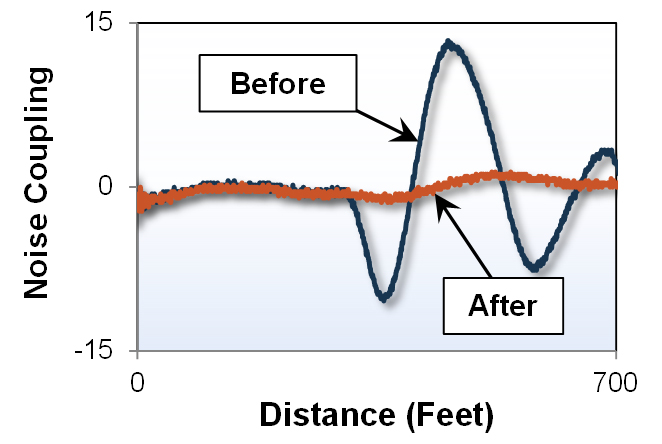
IRM Data Showing Location of Noise Coupling (RTDR Data)

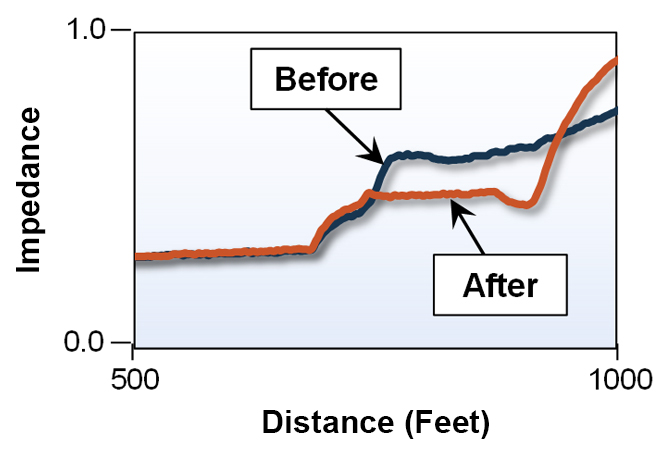
IRM Data Showing Location of Impedance Change (TDR Data)

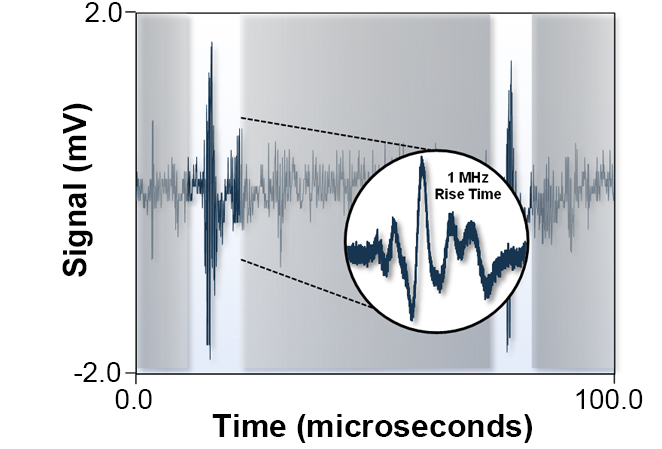
Data Showing Extraneous Noise with SRM

COMPREHENSIVE LPRM TESTING FOR METAL WHISKER BURNING AND SIGNAL INTEGRITY PROBLEMS

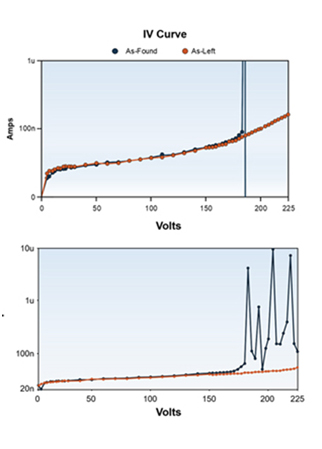
A common preventative maintenance activity for BWRs is to perform electrical tests such as current-voltage (IV) measurements of LPRMs during the outage. As most BWRs have between 125 and 175 LPRMs, this testing activity can take up valuable I&C resources and at times can become a critical path activity. AMS offers comprehensive LPRM testing services to automate this testing activity.  By integrating Multiplexers with multiple AMS CHAR systems, LPRM IV testing can be performed on nearly 80 detectors at a time while also providing complete electrical characterization of each detector through performance of TDR, IR, and DC Resistance measurements. This automated service significantly reduces LPRM testing time, allowing all detectors to be tested in approximately one shift.

In addition to automating the testing process, AMS also has unique capabilities to resolve any problems that are identified. For example, a typical failure mechanism for LPRMs is metal whisker growth between the plates of the detector. These whiskers can short circuit the LPRM detector, which must then be placed in bypass mode. Each plant must have a certain percentage of LPRMs operational to remain online.

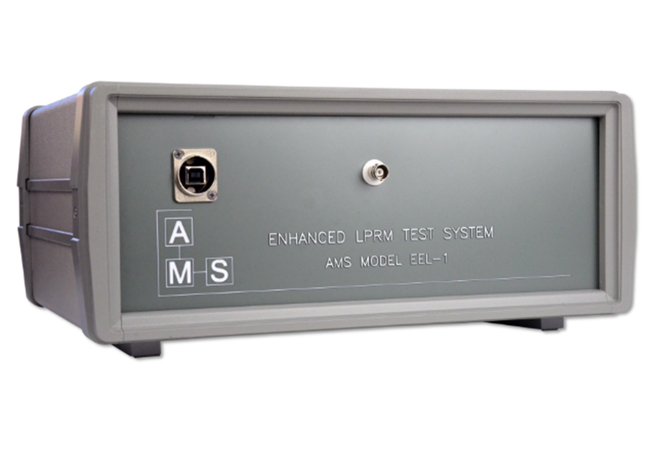
AMS offers comprehensive LPRM testing services to rejuvenate LPRMs by “burning” the metal whiskers in the detector using the CHAR Cable Characterization System.  The AMS Enhanced LPRM (EEL) IV allows up to 60mA of current to flow to the detector during an IV curve spiking event for improved metal whisker burn. If a poor IV curve is observed during high-speed LPRM testing using the CHAR system, AMS will then follow-up with the EEL test system to help heal the detector. The EEL test system can also be used to target bypassed or malfunctioning detectors, allowing plants to avoid expensive detector replacement.


Benefits of LPRM Testing:

CONNECT TO NEARLY 80 DETECTORS AT A TIME

PERFORM COMPREHENSIVE ELECTRICAL CHARACTERIZATION (TDR, IR, DC RESISTANCE)

REDUCES TEST TIME TO APPROXIMATELY ONE SHIFT

HEAL BYPASSED AND SPIKING DETECTORS

HIGH FREQUENCY DATA SAMPLING TO BETTER OBSERVE SPIKING EVENTS

CONFIGURABLE CURRENT LIMIT FROM 5-60 MA

CONTINUOUS VOLTAGE RAMP

It is common for plants who have implemented AMS’s NI Testing services to have no start-up issues with SRMs/IRMs for the first time in years, while also being able to closeout the drywell faster due to the fast LPRM testing. For more information on our testing approach, please click here. Please contact us for more information on implementing the AMS NI testing program at your site.